
Posted by Mia Wren on 19th Jun 2026
Best Yorkshire Pudding Tin UK: A Baker's Buying Guide
If you've ever pulled a tray of pale, sunken puddings out of the oven and blamed the recipe, the tin probably had more to do with it than the batter. A good Yorkshire pudding tin holds its heat through the cold-batter moment, distributes that heat evenly across every cup, and releases cleanly so the puds lift out instead of welding themselves to the metal. Most of the cheap trays on Amazon do none of those three things well.
This is a buying guide for bakers who've had enough of warped trays, stuck puddings, and the back-of-the-oven row that comes out two shades paler than the front. It covers what to look for, the formats worth knowing about, and the questions Sunday cooks keep asking.
What actually matters in a Yorkshire pudding tin
Most of the buying advice online focuses on the wrong things. Forget the colour of the coating or whether the box says "professional." The four things that decide whether a tin is any good are gauge, material, cup depth, and release.
Gauge is the thickness of the metal. Thin, lightweight tins lose their heat the second cold batter hits them, which is exactly when the rise needs the heat most. Heavy-gauge tins hold their temperature, so the batter sizzles on contact and the puff starts immediately. If you can flex the tray with your hands in the shop, it's not the one.
Material matters because of how heat moves through it. Carbon steel holds heat better than aluminium and stands up to repeated high-temperature baking without warping. Most cheap supermarket trays are pressed from light aluminium that buckles after a few roast dinners and never sits flat on the shelf again. Carbon steel is what proper commercial bakeware is made from, and it's what you want at home if you cook a roast more than three times a year.
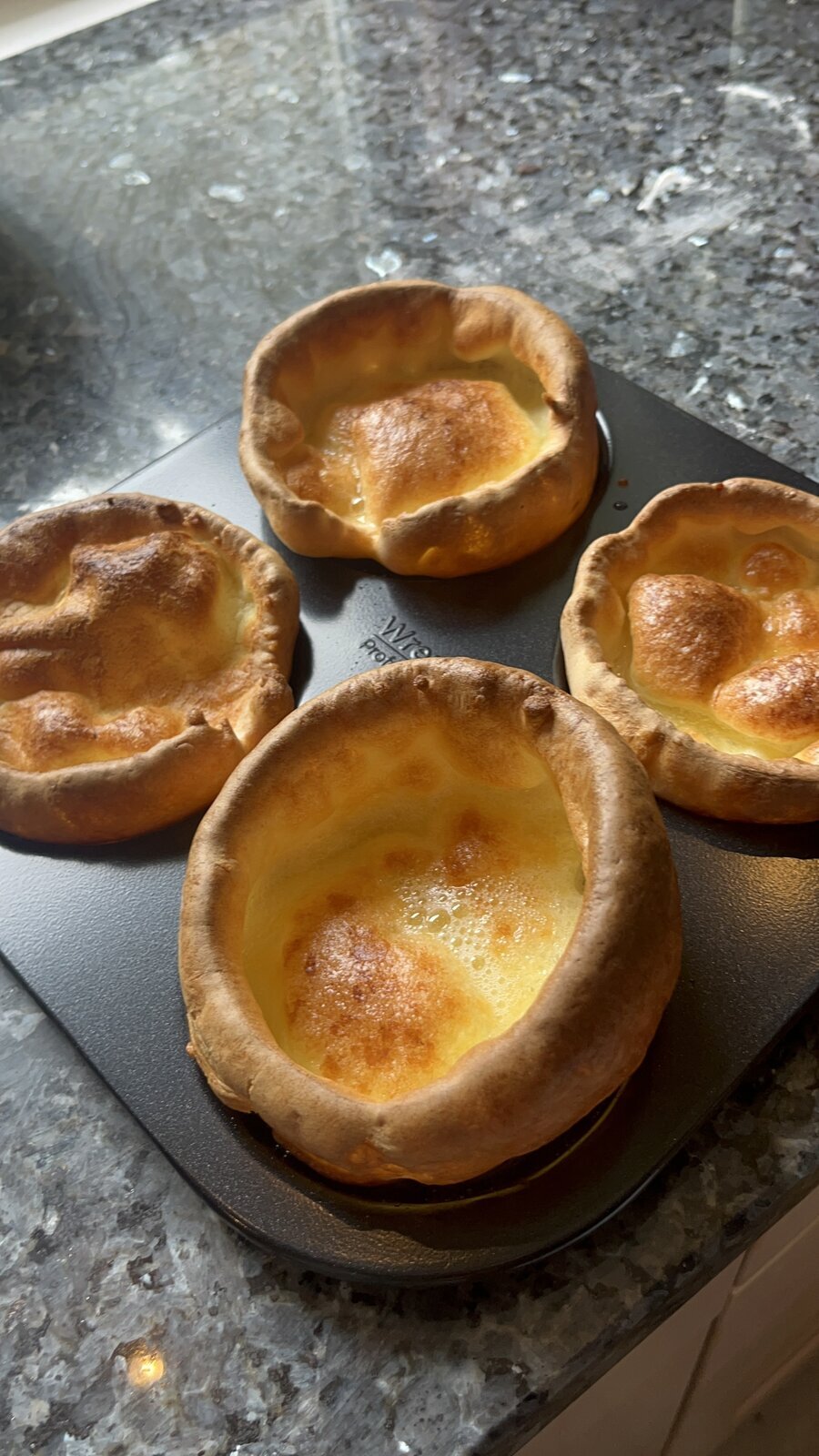
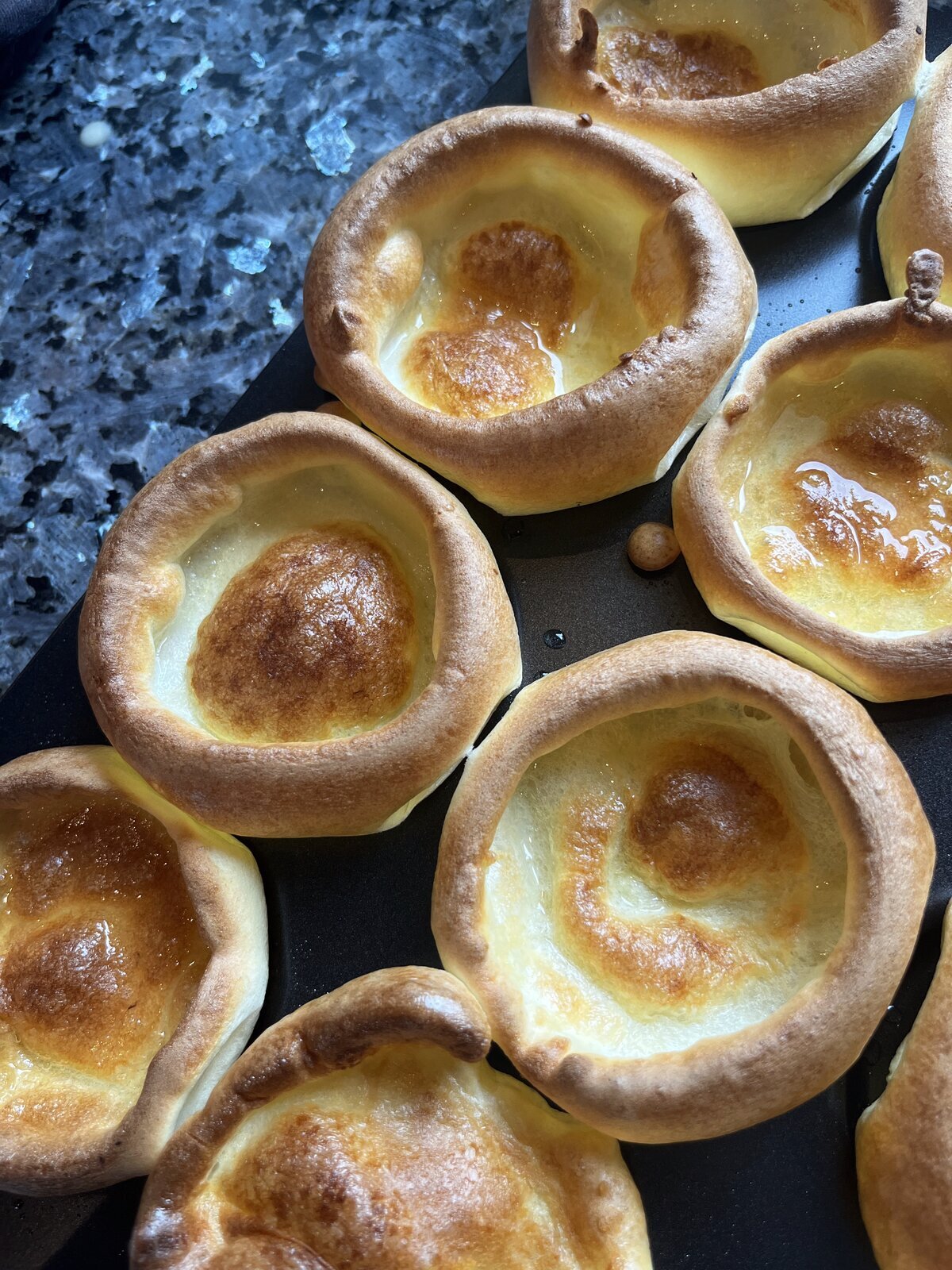
Cup depth is the one most buyers don't think about until they've got it wrong. Deep, muffin-shaped cups give you a thick, bready pudding — closer to a popover. Shallow cups, around 2cm deep, give you the classic crisp-edged Yorkshire with a natural well in the middle for gravy. If you've ever wondered why pub Yorkshires look the way they do and yours don't, it's almost always the depth.
Release comes down to the non-stick coating and how well it's applied. A good PFOA and PTFE-free coating on heavy-gauge steel will outlast a thinner tray's coating several times over, because the metal doesn't warp and stress the coating every time it heats and cools.
Carbon steel vs aluminium: why the material matters
This is where most of the cheap tins fall down. Aluminium is light, cheap to press, and conducts heat quickly — which sounds like a virtue until you realise it also loses heat just as quickly. The moment cold batter hits an aluminium tray, the cup temperature drops sharply. The batter doesn't sizzle, the steam doesn't build, and the rise never gets going.
Carbon steel is denser and slower to give up its heat. When you preheat a carbon steel tray with fat in it, every cup holds that temperature long enough for the batter to flash to steam and start climbing. It's why bakeries use carbon steel and why properly made British baking tins have been carbon steel for over a century.
The other thing carbon steel does is stay flat. Aluminium trays warp under the heat needed for a proper Yorkshire — 220°C or higher — and once warped, they never recover. A warped tray sits at an angle in the oven, the fat pools to one side, and the puddings on the high edge bake thinner than the ones on the low edge. Wrenbury tins are made from heavy-gauge carbon steel that takes Yorkshire pudding heat in stride. For a longer look at why thin tins buckle and how to stop it, see our care guide on how to make your baking tray last 10 years.
4-hole vs 12-hole: which size to buy
This comes down to what kind of Yorkshire you actually want at the table.
A 4-hole tray gives you four large individual Yorkshires — the generous, pub-sized ones people reach for first. The cups are wider and shallower, which is exactly the shape that produces a tall, dramatic rise with a crisp open shell. If you do a proper Sunday roast and want everyone to have a big Yorkshire to put gravy in, the 4-hole tray is the natural choice.
A 12-hole tin gives you smaller, neater puddings — the kind that suit a tidier plate or a buffet table. They cook a touch faster because there's less batter per cup, and you can squeeze more around the plate for guests who want two or three. The 12-hole tin is also useful for kids' portions, where a giant Yorkshire is more than anyone can manage.
In most households, the honest answer is buy both, and use them for different occasions. If you're starting with one, the 4-hole tray suits a traditional roast, and the 12-hole tin suits anything where smaller portions matter.

4-Cup Yorkshire Pudding Tray — Set of 2
£29.99
Shallow 4-cup trays in heavy-gauge carbon steel — built for the tall, crisp, gravy-well Yorkshires a proper roast deserves. Two trays bake the whole table at once.
View product
12-Cup Yorkshire Pudding Tin
£19.99
Shallow 12-cup carbon steel tin with PFOA and PTFE-free non-stick — neat individual puds that release cleanly, with the 10-year guarantee behind them.
View productCooking for a bigger table or batch-freezing? There's a 12-cup tin set of two as well — twenty-four puds in a single oven session. If you want to see the whole range side by side, browse the full Yorkshire pudding tin collection.
What about a muffin tin instead?
Plenty of cooks use a 12-hole muffin tin for Yorkshires, and it does work — but it doesn't work brilliantly. Muffin cups are deeper and steeper than Yorkshire cups, which gives you a denser, more bread-like pudding rather than a crisp open shell with a gravy well. If you cook a roast often enough to care, a dedicated shallow tin is one of the better small upgrades you can make to a Sunday lunch.
Non-stick coatings: what to look for and what to avoid
Non-stick is where the cheap end of the market falls apart fastest. A poor coating on a thin tin can start to flake within months, especially if it sees the high heat that Yorkshires need.
A good non-stick should be PFOA and PTFE-free, applied in at least two layers to heavy-gauge steel, and rated for the temperatures you'll actually bake at. Wrenbury's tins use a double-layered coating made without PFOA or PTFE, applied to thick carbon steel that doesn't flex under heat — and a coating only lasts as long as the metal underneath stays flat. Hand-wash anything non-stick: the dishwasher's hot detergent and constant abrasion is what kills coatings prematurely on every brand.
The 10-year guarantee
A guarantee is only as useful as the brand standing behind it. Wrenbury tins come with a 10-year guarantee, which is a long time in bakeware — most cheaper trays are written off as disposable inside two years. A £25 tray you keep for ten years costs £2.50 a year. A £10 tray that warps after eighteen months costs you more than that and a wasted Sunday lunch.
How to use a good tin properly
Even the best Yorkshire pudding tin can't fix bad technique. Three habits will get the most out of a quality tray.
Preheat the tin in the oven with the fat already in it, until the fat is shimmering and almost smoking. Cold fat in a cold tin is the single most common reason puddings stay flat. Pour the rested batter quickly into the hot fat — it should sizzle on contact — and shut the door immediately. Don't open it again for the first 20 minutes; Yorkshires rise on trapped steam and the moment you let it out, the climb stops.
For more on why puddings don't rise even when the tin's right, see our guide on why Yorkshire puddings don't rise. For the full method, including batter ratios and oil choice, the ultimate Yorkshire pudding guide walks through everything end to end. And if loaf tins are next on the list, the best loaf tin UK buying guide applies the same gauge-and-release rules to bread.
Frequently asked questions
What's the best Yorkshire pudding tin UK bakers actually use?
Heavy-gauge carbon steel with shallow cups and a PFOA and PTFE-free non-stick coating is what works at home and what professional kitchens use. The cup depth matters as much as the material — shallow cups around 2cm produce the tall, crisp puds with a gravy well; deep cups produce bready muffin-shaped ones. A 4-cup tray suits a roast where everyone wants a generous Yorkshire; a 12-cup tin suits larger tables or smaller portions.
Why do my Yorkshire puddings stick to the tin?
Three things, usually together. The fat wasn't hot enough when the batter went in, so the batter touched bare metal instead of sitting on a layer of sizzling oil. The tin doesn't have a good non-stick coating, or the coating's worn through from dishwasher use. Or the tin is too thin and warped, so the cups aren't sitting flat and the batter pools in odd places. Hot fat, a heavy non-stick tin, and hand-washing — that's the whole answer.
Will a carbon steel Yorkshire pudding tin rust?
Not if you look after it. The non-stick coating on a quality tin protects the steel underneath as long as the coating's intact. Wash by hand, dry it properly before it goes back in the cupboard, and don't store it damp. If a tin ever does develop a rust spot through a scratch, a light scrub and a bake at high heat will usually deal with it.
Can I put a carbon steel tin in the dishwasher?
You can, but don't. Dishwasher detergent and constant abrasion is what kills non-stick coatings in months rather than years, on every brand. A warm cloth and a drop of washing-up liquid is faster and far kinder to the tin.
Do I need to season a new Yorkshire pudding tin?
A good non-stick tin doesn't need seasoning the way a cast-iron pan does. Some bakers like to give a new tray its first run with a light layer of oil baked on at high heat to settle the coating, and that doesn't hurt — but it isn't required for performance.
Is silicone a good alternative?
Silicone moulds release puddings reliably, but they don't hold heat the way carbon steel does, so the rise tends to be lower and the crisp edges softer. Silicone also flops around in the oven and needs a tray underneath it to be safe with hot fat, which is fiddly. For occasional bakers it's fine; for anyone who cares about a proper Yorkshire, carbon steel is the better tin.
4-hole or 12-hole for toad in the hole?
Toad in the hole works best in a single shallow rectangular roasting tin. If you do want individual versions, a 4-hole tray gives better proportions than a 12-hole — the sausage needs room.
The bottom line
The best Yorkshire pudding tin is the one that holds its heat, stays flat, releases cleanly, and is still doing all three a decade from now. That means heavy-gauge carbon steel, shallow cups, a PFOA and PTFE-free non-stick coating, and a brand willing to stand behind it long-term. If you do a proper Sunday lunch and want tall, crisp, gravy-well Yorkshires every time, the tray is doing more of the work than the recipe — and a good one pays for itself many times over.
If bread is next on the list, the same gauge-and-release rules apply — see the best loaf tin UK buying guide, or browse the loaf tin collection.