
Posted by Mia Wren on 17th Aug 2026
Best Donut Pan UK: Which to Buy and How to Use It
Most donut pans disappoint in one of two ways. The floppy silicone sort folds in half as you lift it, slops batter across the oven shelf, and turns out rings so pale they look unbaked. The thin metal sort holds its shape but browns the front cups faster than the back ones, so half the batch is golden and half is anaemic. Neither failure has anything to do with your recipe.
This guide covers what actually matters when you buy a donut pan in the UK: the material, the cup size, whether one pan is enough, and how to get bakery-shaped rings out of it once it arrives. It also answers the question most guides dodge, which is whether baked doughnuts are worth making at all.
First, an honest word about baked doughnuts
A baked doughnut is not a fried doughnut, and a pan will not make it one. Fried dough gets its bronzed shell and slight chew from hot oil. A baked ring is a different thing: lighter, closer to a tender glazed sponge, with a soft crumb rather than a chew. If you go in expecting a copy of the yeasted, deep-fried original, you will be disappointed, and it will not be the pan's fault.
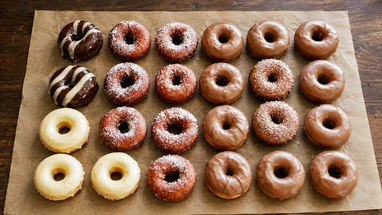
Judged as their own thing, they earn their place. There is no pan of hot oil to mind, no lingering smell in the kitchen, and a batch goes from mixing bowl to cooling rack in under half an hour. The finish does most of the doughnut work: dip a warm ring in melted butter and cinnamon sugar, or in a proper chocolate glaze, and nobody at the table pauses to debate categories. They are also the version you can make on a Tuesday with children helping, which fried doughnuts emphatically are not.
What to look for in a donut pan
Steel, not silicone
The material decides the result more than anything else. Silicone insulates, so the batter steams gently instead of browning, and the rings come out pale with a rubbery skin. Cheap silicone also bakes unevenly, and because a full mould has no rigidity, you either balance it on a baking sheet or watch it buckle as it goes in. Carbon steel conducts heat properly. The rings colour evenly, the surface takes on a light crust that holds a glaze, and the pan slides in and out of the oven without a wobble.
A heavy gauge
Thin steel is only half a fix. It heats fast but unevenly, which is where the golden-front, pale-back batch comes from, and under a hot oven's heat it can buckle just like a cheap baking tray. If you have ever heard the metallic crack of a warping tin, you know the sound. A heavy-gauge pan spreads heat across all six cups so the batch bakes as one, and it stays flat. We have written before about why thin bakeware warps, and everything in that piece applies to donut pans.
A coating you can trust
Doughnut rings have more surface in contact with the pan than almost any other bake, so the coating earns its keep here. Look for a non-stick coating made without PTFE or PFOA, and treat it kindly: a light grease for the first few bakes helps the release while the coating beds in, and after that the rings should turn out whole with a gentle tap.
Full-size cups, unless you want minis
Pans come with two cup sizes and they behave differently. Full-size cups bake a 4-inch (10cm) ring, the bakery size, in roughly 15 to 18 minutes. Mini cups bake a two-bite ring in 8 to 10 minutes, which is sweet for a party but fiddly to glaze and gone in seconds. If you are buying one pan, buy full-size. A recipe written for one will not time correctly in the other, so check which size your pan is before you set the timer.
One pan or two
A six-cup pan handles a weekend batch. The catch is that baked doughnuts are at their best the day they are made, and six rarely survives the first hour. If you bake for a family, a bake sale or a birthday, a set of two pans puts a dozen through the oven in one go, with no waiting for the first pan to cool before you can fill it again.
The pans we make
Wrenbury's doughnut pans are pressed from heavy-gauge carbon steel with a non-stick coating made without PTFE or PFOA, and both carry the 10-year warranty that covers the whole range. That warranty is worth reading rather than skimming: it covers the coating peeling or blistering and the pan warping, which are precisely the two ways cheap donut pans die. If either happens within ten years of normal home baking, we repair or replace the pan free of charge.

Non Stick 6 Cup Donut Pan
£15.99
Six full-size 4-inch rings in heavy-gauge carbon steel, so every doughnut browns at the same rate.
View product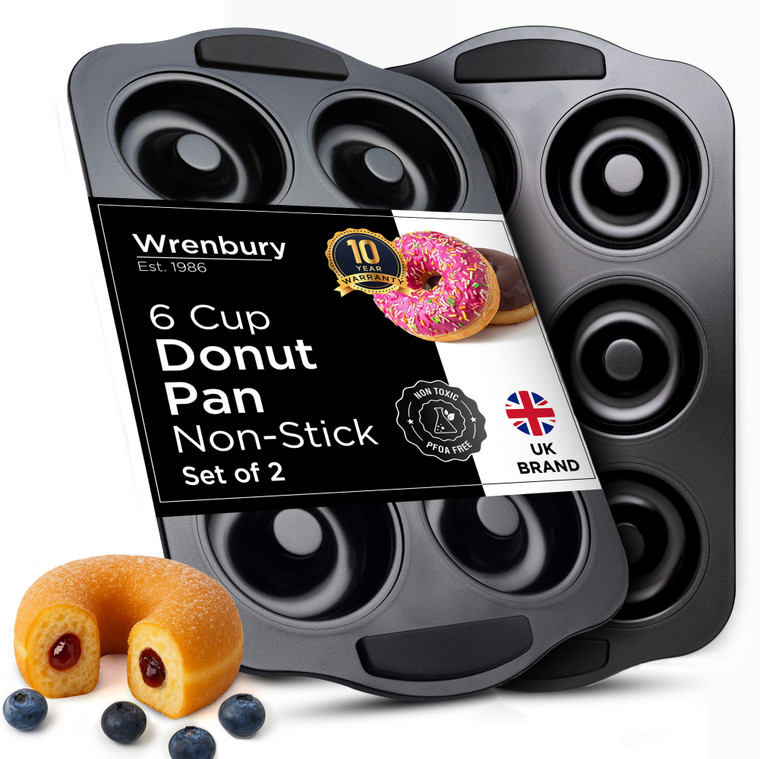
Non Stick 6 Cup Donut Pan Set of 2
£31.99 £24.99
Two six-cup pans, so a full dozen goes through the oven in one session.
View productThe single donut pan is the right starting point if you are new to baked doughnuts. The doughnut pan set of 2 earns its place the first time you bake for more than four people. Both sit in our donut and doughnut pans collection, and if you are weighing up a wider kit, our guide to the best bakeware for home baking puts the whole range in context.
Getting the best out of it
Baked doughnuts that keep their hole
- Grease lightly: A quick wipe of butter or oil for the first few bakes helps the non-stick coating release cleanly while it beds in.
- Fill two-thirds: This is the rule that decides whether you get rings or muffins. Batter rises, and an overfilled cup swallows its own hole.
- Pipe, don't pour: A piping bag gives the neatest fill, and a freezer bag with a corner snipped off does the same job for nothing. A spoon works, just slower and messier.
- Bake until springy: The rings are done when they spring back from a light press. Let the pan sit for a minute or two, then turn them onto a rack.
- Glaze barely warm: Warm rings set a glaze; hot ones shed it. Cinnamon sugar wants melted butter first so it clings.
Between batches, wash by hand, dry promptly, and the pan will outlast the recipe book. The full routine is in our care and use guide.
Common questions
Do baked doughnuts taste like fried ones?
No, and it is better to know that before you buy. They are lighter and more cake-like, without the fried shell. The glaze or cinnamon sugar carries most of the doughnut character. Judged on their own terms they are very good; judged as imitation fried doughnuts they will let you down.
Why did my doughnuts come out without holes?
The cups were overfilled. Batter rises in the oven, and anything past about two-thirds full closes over the centre post as it grows. Fill less than looks right and the hole survives.
Do I need to grease a non-stick donut pan?
For the first few bakes, yes, lightly. It helps the release while the coating beds in. After that, most batters turn out cleanly without it, though a very sugary batter always benefits from a quick wipe of butter or oil.
Is a metal donut pan better than a silicone one?
For browning, yes, and it is not close. Silicone insulates the batter and flexes as it bakes, so you get pale rings and the occasional spill. Steel browns the surface, holds its shape, and sits flat on the shelf.
Can I just use a muffin tin instead?
You can bake the same batter in a muffin tin and it will taste fine, but it will be a muffin: no ring, no hole, longer bake, and nowhere near as much surface for the glaze. The ring shape is the point of the pan.
What else can I bake in a donut pan?
Small bagels and bagel-style breakfast bakes shape well in the ring cups, and doughnut-shaped sponges take a glaze beautifully. If you enjoy ring-shaped bakes generally, our mini bundt cake guide covers the fancier end of the same idea.
The short answer
Buy a full-size, heavy-gauge carbon steel donut pan with a coating made without PTFE or PFOA, fill it two-thirds, and expect a light glazed ring rather than a fairground doughnut. One pan for a household, two for a crowd, and a 10-year warranty behind both so it is the last one you buy.