
Posted by Mia Wren on 22nd Jul 2026
Best Mince Pie Tin UK: A Baker's Buying Guide
If your mince pies have ever come out with a pale, soggy base while the filling has welded itself to the tin like cement, the tin is a more likely culprit than the recipe. Mincemeat is sugar and fat under heat — it boils, it spits, and the moment it touches bare or thin metal it either sticks fast or scorches. A tin that's built for the job stops both.
This is a buying guide for the run-up to Christmas: what actually matters in a mince pie tin, the shapes worth knowing about, and honest answers to the questions bakers ask every December when the same tin lets them down again.
What to look for
Gauge. Thin, pressed trays flex when you pick them up warm from the oven, and a tray that flexes doesn't sit flat. An unlevel tray means the filling pools to one side of each cup instead of setting evenly, which is exactly when it boils over and welds to the metal. Heavy-gauge steel holds its shape through a whole batch, tray after tray.
Cup depth. A traditional mince pie cup is shallow, around 1.5–2cm deep, which is what gives the classic thin, crisp pastry base rather than a thick, pale one. Cups that are too deep behave more like a jam tart tin — fine for a different bake, but not what a proper mince pie wants.
Base shape. This is where most buying guides stop short, and it's worth a section of its own below: flat-based tins and rounded-base tins make genuinely different pies.
Release. A non-stick coating made without PTFE or PFOA, on steel heavy enough not to warp, is what stops mincemeat welding itself in permanently when it bubbles over — which it will, eventually, however carefully you fill the cases.
Size. Most UK mince pie tins are built around a standard cup, roughly 7cm across, which suits shop-bought or homemade shortcrust cut with a standard cutter. If you're used to a particular pastry cutter size, check the cup dimensions against it before buying rather than assuming "12-cup" means the same cup size everywhere — trays vary more than the name suggests.
A note on the coating
Not all non-stick is equal, and mince pies are a harder test than most bakes because of the sugar. A single thin layer wears through fast once caramelised filling has been baked onto it a few times over a season. A proper coating is applied in at least two layers to steel heavy enough that it isn't flexing every time it goes from fridge-cold pastry to a hot oven and back — flexing is what cracks a coating from underneath, long before the outside looks worn. Wrenbury's tins use a double-layered coating made without PTFE or PFOA on heavy-gauge carbon steel, which is the combination that keeps working after the coating on a thinner tray has already started to fail.
Flat base vs rounded base
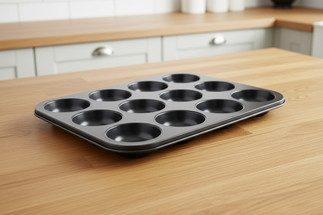
Flat, traditional base. The classic shape: a shallow, straight-sided cup with a flat bottom. It gives the crisp, evenly browned base that a mince pie is supposed to have, and it's the shape most people picture when they think "mince pie tin."
Rounded base. A gently curved cup rather than a flat one. The curve does two practical things: it makes the finished pie easier to lift out cleanly, because there's no sharp corner for pastry to catch on, and it gives the pie a slightly domed underside that some bakers prefer for texture. It suits anyone who's had pastry corners snap off in a flat tin.
Neither is more "correct." Flat base if you want the traditional shape and are confident with pastry; rounded base if clean release matters more to you than a perfectly flat bottom.

Traditional 12 Cup Mince Pie Tin
£19.99
The classic shallow, flat-based shape in heavy-gauge carbon steel, made without PTFE or PFOA.
View product
12 Cup Rounded Base Mince Pie Baking Tray
£17.99
A gently curved cup for cleaner release, same heavy-gauge carbon steel and PTFE and PFOA-free coating.
View productBoth come with the same 10-year warranty as the rest of the range — a mince pie tin only earns its cupboard space if it's still flat and non-stick next December. Both tins run seasonally and can be briefly out of stock outside the run-up to Christmas; check the mince pie tin collection for current availability.
Why fillings boil over and weld to the tin
Mincemeat is sugar-heavy, and sugar caramelises into something closer to glue the moment it hits hot metal and cools. A few habits keep it in the pastry case where it belongs. Don't overfill: a heaped teaspoon per case is generous enough, and any more expands as it heats and spills over the pastry edge. Prick or slash the lid to let steam escape, since trapped steam is what pushes filling up and out. Brushing the lid with milk or beaten egg helps it seal to the base rather than lifting and letting filling bubble through the join. And get the pies out of the tin promptly once they're cool enough to handle — filling that's welded itself to the metal sets far harder once it's stone cold.
An oven that's genuinely at the temperature the recipe asks for also matters more than most bakers assume. Too hot, and the filling boils hard before the pastry has had a chance to set around it; a touch too cool, and the pies sit in the oven longer, giving the filling more time to bubble its way out over the edge. An oven thermometer is a cheap way to find out whether your oven runs hot, which most do.
If a pie does boil over, don't panic and don't scrub. On a good non-stick tin, a boiled-over pie usually still releases with a gentle twist once it's properly cool; on a cheap thin tray with a failing coating, that's exactly the moment it grips on and takes half the base with it. For the pastry and filling side of things, our guide on how to make perfect mince pies covers the recipe end to end.
Frequently asked questions
What's the best mince pie tin for a first-time baker?
The traditional flat-based 12-cup tin is the easiest to get consistent results from, since it's the shape most recipes and timings are written for. Heavy-gauge carbon steel with a non-stick coating made without PTFE or PFOA will forgive minor overfilling far better than a thin supermarket tray.
Why do my mince pies stick even though I greased the tin?
Usually the coating, not the greasing. A worn or thin coating needs more help than grease alone can give, and a boiled-over filling will find any gap regardless. Prick the lids to stop the boil-over in the first place, and remove pies from the tin once they're cool enough to handle, not once they're stone cold.
Deep or shallow — which makes a better mince pie?
Shallow, around 1.5–2cm. That depth is what gives the crisp, evenly baked base a mince pie is meant to have. Deeper cups produce something closer to a jam tart: thicker pastry, softer base.
Does a rounded-base tin change the taste?
No, only the shape and how easily the pie comes out. The curve means less pastry catches on a sharp corner, so release is cleaner — useful if you've ever snapped a base trying to lever a pie out of a flat tin.
Can I put a carbon steel mince pie tin in the dishwasher?
You can, but hand-washing keeps the non-stick coating working for longer. Dishwasher detergent and the constant abrasion of a full load is what wears coatings out early, on any brand.
Will a warped mince pie tin get better with use?
No. Once a thin tray has buckled under heat, it stays buckled, and an uneven tray is exactly what causes fillings to pool and boil over unevenly across a batch. Heavy-gauge steel that doesn't flex in the first place is the fix, not a workaround.
Why buy a mince pie tin outside December?
Seasonal bakeware tends to sell out fast once the run-up to Christmas actually starts, and a tin bought in good time is one less thing to chase in a busy December. Buying early also means it's already in the cupboard for a test batch, which is the sensible way to find out whether a new recipe or a new tin needs any adjusting before it matters.
A mince pie tin that holds its shape, releases cleanly, and does both again next Christmas is doing most of the work the recipe gets blamed for. Get the tin right and the pastry looks after itself. For what shortens the life of any tray, ours included, see how to make your baking tray last 10 years.