
Posted by Mia Wren on 4th Aug 2026
Best Oil for Yorkshire Puddings (Not Olive Oil)
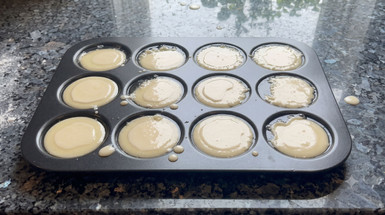
The batter goes in and nothing happens. No hiss, no spit, just a quiet slick settling into the tin. You already know how these are coming out: flat, pale, and welded to the bottom by the time you get a knife under them.
That silence is the fat telling you it wasn't hot enough.
Nine times out of ten it's the oil, not the batter, that decided how your Yorkshires turned out.
What the fat actually has to do
A Yorkshire pudding rises on shock. Cold batter hits fiercely hot fat, the water in it turns to steam, the outside sets, and the middle has nowhere to go but up.
That only works if the fat's properly hot the moment the batter lands. Which means it needs to sit close to smoking without actually burning.
That's the whole game. Every fat has a smoke point, the temperature where it breaks down and starts to smoke. Yorkshires bake at around 220°C, or 200°C in a fan oven. You want one that shrugs that off, not one that scorches and turns bitter before the batter's anywhere near it. If you want the batter side right as well, our definitive guide to batter ratios covers that.
The oils I reach for
Beef dripping first, for flavour. It's the traditional choice and it still tastes the best, with that proper roast-dinner savouriness you just don't get from a neutral oil. It handles roasting heat without complaint. Lard does much the same job if dripping's hard to find where you are.
If you'd rather use something that's always in the cupboard, a neutral oil with a high smoke point won't let you down. Sunflower, vegetable, rapeseed (the same thing as canola), and groundnut all sit comfortably above what the oven's doing. They've got almost no flavour of their own, so the beef and the gravy do the talking. They're also the obvious pick if you're cooking for vegetarians.
One everyday choice, if you want it narrowed down? Plain sunflower or vegetable oil. It's cheap, it's already in the cupboard, and it holds its heat without any fuss.
The two to leave out
Olive oil is the one people reach for out of habit, and it's the wrong call here. It starts smoking well below what the oven needs, so it burns before the fat's hot enough to lift anything at all. Extra virgin's worse again. Save it for salads.
Butter is the other trap. It goes even sooner, because the milk solids blacken and turn the whole thing bitter. You'll get a scorched, speckled base and none of the rise you were after.
If you love a buttery note, brush a little on after they come out. Not before they go in.
How much, and how hot
Two mistakes account for most of the greasy or stuck puddings people write to me about.
The first is too much fat. A puddle in the bottom of each hole leaves you with soggy, oily-bottomed puddings that slump on the way out. You want just enough to come about half a centimetre up the sides of each cup. A teaspoon per hole is about right.
The second is fat that never got hot enough. Oil into the tin, tin into a fully preheated oven, and leave it there until the fat's shimmering and just starting to smoke. That's a good 10 minutes, usually. When the batter goes in it should hiss and spit straight away. If it sits there quietly you've gone too early, and they'll stick and stay flat. If flat puddings are your recurring problem, there's more on the causes in why Yorkshire puddings do not rise.
This is where the tin earns its keep. A thin, lightweight tray dumps its heat the second you open the door and pour, so the fat cools at exactly the wrong moment. Heavy carbon steel holds on to it, and the oil's still fierce when the batter lands. Our Yorkshire pudding tins are made without PTFE or PFOA, and that heavy gauge is why the fat stays hot enough to do its job, which is also why we back them with a 10-year warranty.

12 Cup Yorkshire Pudding Tin Tray
£19.99
Heavy-gauge carbon steel that keeps its heat when the oven door opens, so the fat is still fierce when the batter lands. A dozen at once for a full table.
View product
4 Cup Non-Stick Yorkshire Pudding Tray
£18.99
Deep 2.5cm cups for taller puddings at a smaller table, oven safe to the 220°C Yorkshires need. Same fat rules apply.
View productChoosing between the two comes down to the size of your table. If you're weighing up sizes and holes, our buying guide to the best Yorkshire pudding tin walks through it, and the care and use guide covers keeping the coating at its best.
Frequently asked questions
Why did my Yorkshire puddings come out greasy?
Almost always too much fat in the tin. A puddle of oil can't drain away, so the base sits in it and turns oily and heavy. Use about a teaspoon per hole, enough to film the sides rather than pool at the bottom.
Can I use olive oil for Yorkshire puddings?
Best avoided. Olive oil smokes at a lower temperature than the oven runs at, so it burns before the fat's hot enough to give you any rise, and it leaves a bitter taste behind. A neutral oil like sunflower or vegetable works far better.
How hot does the oil need to be?
Hot enough to shimmer and just start smoking. The batter should hiss and spit the instant it goes in. If it doesn't, take the tin back out and give the fat another few minutes in the oven before you try again.
Is beef dripping better than oil?
For flavour, yes. Dripping gives a proper savoury, roast-dinner taste that neutral oils don't. Oil wins on convenience and it's the one to use for vegetarians, and it still rises just as well.
Do I need to grease the tin as well as adding oil?
No. The hot fat's doing both jobs at once. With a decent non-stick tin and fat that was properly hot, the puddings lift straight out with nothing extra needed.
The oil isn't a detail. Pick one that can take the heat, use a teaspoon a hole, get it smoking before the batter goes near it, and back all that with a tin that holds its temperature.
Do that and the rise looks after itself. For the full method start to finish, there's also our ultimate Yorkshire pudding guide.