
Posted by Mia Wren on 17th Nov 2026
Individual Cheesecake Pots or a Mini Cheesecake Tin? How to Choose
Header picture: illustration.
Making pudding for a full table this Christmas, and wondering whether to set it in little pots or turn it out onto plates? Individual cheesecakes are a good answer to a crowd. Everyone gets their own, nobody fights over the last slice, and you can make the lot a day or two before anyone arrives.
The question is what to make them in. Glass pots, ramekins, a muffin tray with cases, or a tin with loose bases all work. They just suit different cheesecakes and different days. Here is how we would choose.
The short answer
If your cheesecake is a soft, no-bake one that you want to eat with a spoon, set it in pots or glasses. If you want to bake it, or you want each one to stand on the plate with clean sides you can see, use a mini cheesecake tin with a loose base in every cup. Ramekins sit in the middle: you can bake in them, but the cheesecake stays in the dish.
Most of the trouble people run into with individual cheesecakes comes from mixing these up: a soft no-bake mixture in a tin it can't stand up out of, or a baked one in a glass that was never meant for the oven.
Pots and glasses: when they win
Pots are the easy route for a no-bake cheesecake. Nothing has to come out, so the filling can be as soft and creamy as you like. You can layer it too: crumbs, filling, a spoon of fruit compote, more crumbs. It looks pretty through glass and needs no turning out at all.
For the base, sprinkle a layer of crumbs into each pot and leave them loose rather than pressing them down hard. You will be eating it with a spoon, and a tightly packed base in the bottom of a narrow glass is hard work to dig out.
They have three drawbacks worth knowing before you buy a dozen. Twelve glasses take up a lot of fridge space in the week before Christmas, when the fridge is already full. They are only for no-bake recipes unless the pot is made for the oven. And they all need washing afterwards, by hand if they are good glass.
Ramekins: baked, but served in the dish
Ovenproof ramekins let you bake a cheesecake in individual portions, and because they are solid they can sit in a roasting tin of hot water without leaking. That gentle heat helps the tops set without cracking. The catch is that a baked cheesecake grips a ramekin, so you serve it in the dish. It is a pudding in a pot rather than a cheesecake on a plate.
Only use glass jars in the oven if they say they are ovenproof. Ordinary jam jars and drinking glasses are not, and a cold glass going into a hot oven can crack.
A loose-base tin: when you want them standing on the plate
This is the one to use when the cheesecake itself is the show: a neat round with a biscuit base and straight sides, sitting on its own on the plate. Each cup has a metal disc in the bottom. Once the cheesecakes are cold, you press up from underneath and each one rises out whole.
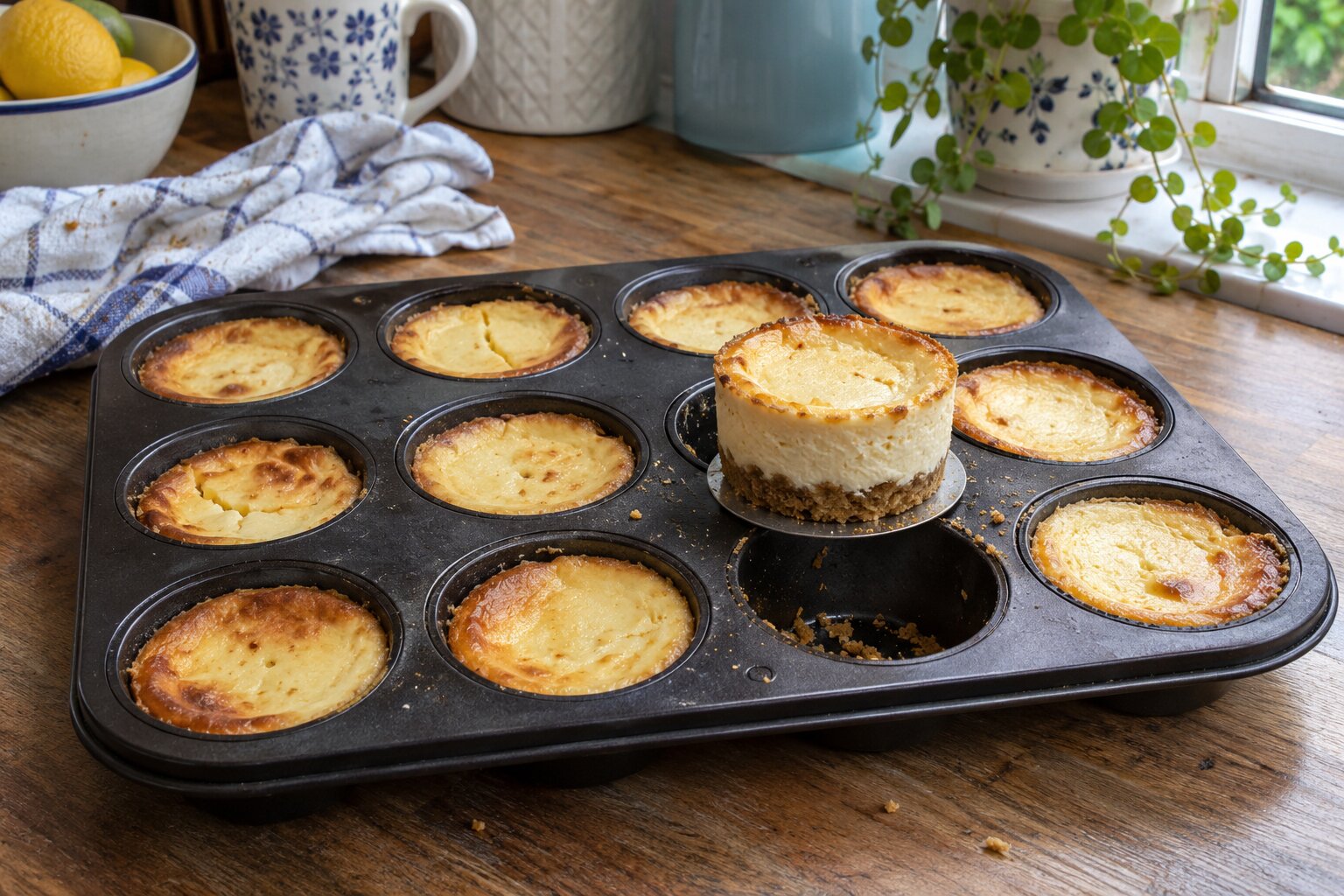
It works for both kinds. Baked cheesecakes go straight into the greased cups, and our mini cheesecake baking time guide has the oven temperature and timings for the tin. For a no-bake cheesecake, put a small disc of baking paper on each base before you add the crumbs. A no-bake filling stays softer than a baked one, and the paper is what lets it slide off the disc cleanly.
Our 12 cup tin makes cheesecakes 7.5cm across and up to 5cm tall, which is a full dessert rather than a canapé. If you are weighing up which tin to buy, our guide to choosing a mini cheesecake tin covers steel thickness, how the bases should fit and why a light tray cracks the cheesecake as you push. You can also read an independent baker's review of the tin, written by someone who does not work here.
The other thing a tin does well is travel. If you are taking pudding to someone else's house, leave the cheesecakes in the tin, cover it and carry the whole thing. Push them out when you get there.
A muffin tray with cases: the route most of us start with
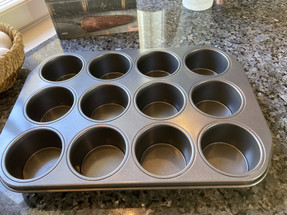
Plenty of people make their first mini cheesecakes in a 12 cup muffin tray with paper cases, and it does work. The cheesecakes come out in their cases and look like cupcakes. Two things help. Use baking paper or greaseproof cases rather than thin paper ones, because cheesecake sticks to ordinary paper and you lose half the base when you peel it. And chill them well before you try to peel anything.
What a muffin tray can't give you is a cheesecake that stands bare on the plate, because there is nothing to push it up with. If you want to serve them without cases, that is where the loose bases earn their place.
How much mixture do you need?
Most cheesecake recipes are written for one 20cm round tin. By our arithmetic, that amount of mixture spread across all 12 cups of a 7.5cm tin comes to about 3cm deep, base included. That gives you a neat, shallow cheesecake. For taller ones, make one and a half times the recipe.
For pots and glasses it depends on the size of the glass, so measure one with water first. Fill it about two thirds full, then multiply by the number of guests. It is a two-minute job and saves a mixture that runs out at pot nine.
Making them ahead for Christmas
Individual cheesecakes are one of the few Christmas puddings that are better made early. They need a long chill to set firm, and they free up the oven and your hands for the day itself.
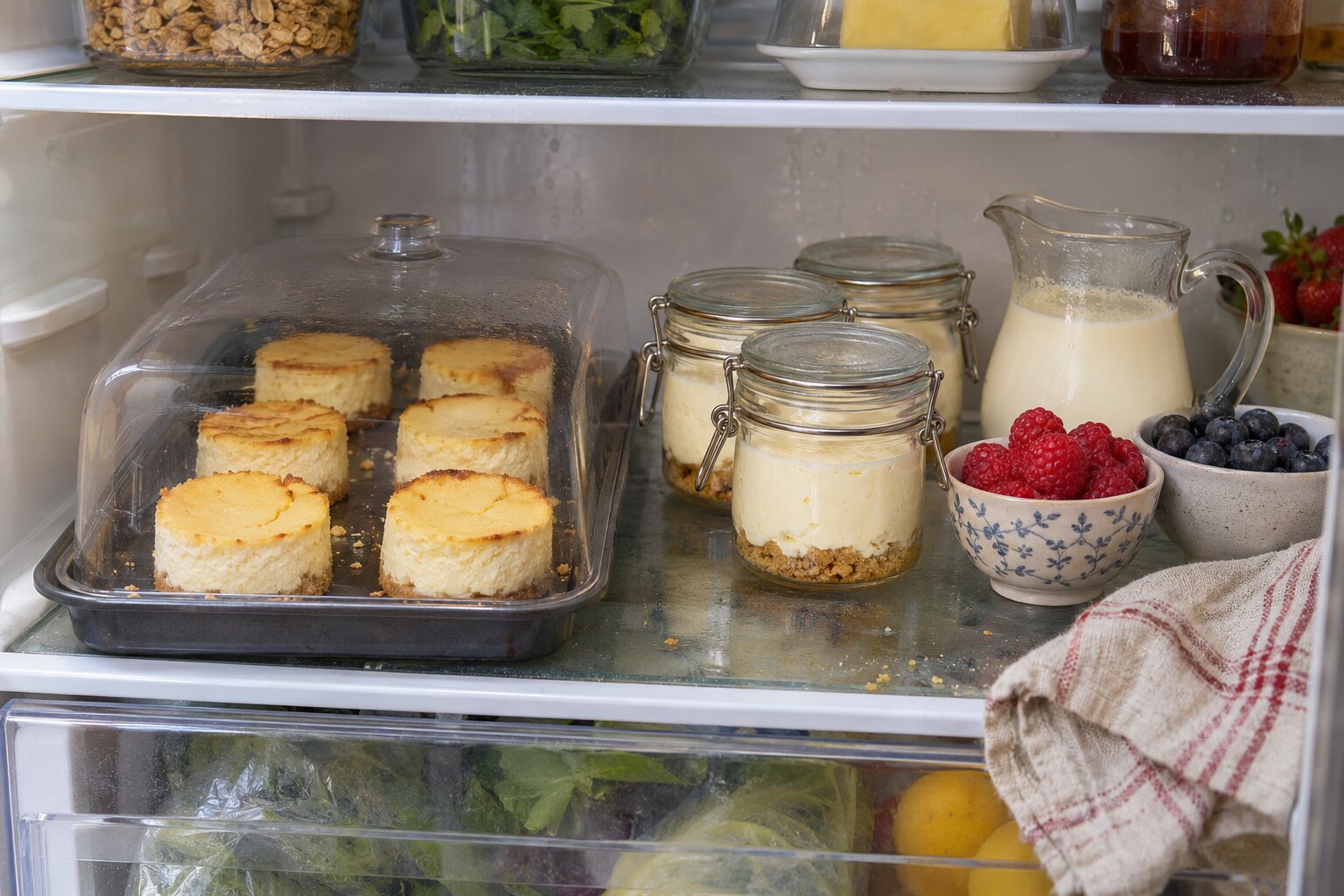
In the fridge, covered, both baked and no-bake cheesecakes keep for two to three days. For longer, freeze them without any topping, wrapped well, and plan to eat them within a month or so. Thaw them overnight in the fridge and add the fruit, cream or chocolate on the day. If you are making a big batch alongside other make-ahead puddings, our mini Christmas puddings in a muffin tin follow a similar timetable.
A make-ahead plan for 12 individual cheesecakes
- Choose the container first: pots or glasses for a soft no-bake you will eat with a spoon, ramekins for a baked one served in the dish, a loose-base tin for cheesecakes that stand on the plate.
- Make them two or three days before: use full-fat cream cheese and fridge-cold cream. Low-fat versions often stay too soft to set.
- Line the bases in a tin: a small disc of baking paper on each loose base for a no-bake filling. A light grease is enough for a baked one.
- Chill overnight: at least a few hours, and overnight is better. Cold and firm is what makes them release cleanly.
- Keep the toppings back: store them plain and covered, and add fruit, cream or chocolate just before serving.
- Push out at the last minute: stand the tin on a jar narrower than the cup and press each base up steadily, then slide the cheesecake off the disc with a palette knife.

Mini Cheesecake Pan, 12 Cup Loose Base
£34.99
Twelve 7.5cm cups, each with its own push-up base, for baked or no-bake cheesecakes that stand on the plate.
View product
Spare Removable Bases, Set of 6
£9.99
Six spare 6.6cm discs, for the one that always goes missing in the washing up.
View product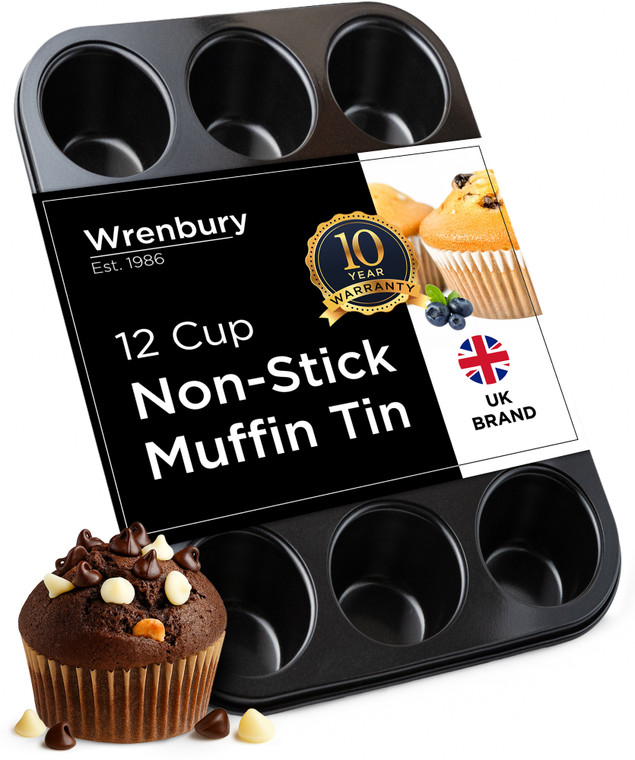
Non-Stick 12 Cup Muffin Tray
£21.99
For cheesecakes baked in cases, and for muffins and mince pies the rest of the year.
View productEvery Wrenbury tin comes with a 10-year guarantee: if the non-stick coating peels or blisters, or the tin warps, in normal home baking, we repair or replace it. The whole range of cheesecake tins is on one page.
Frequently asked questions
Why won't my no-bake cheesecake set?
Usually it is the dairy or the time. Low-fat cream cheese and light cream do not have enough fat to firm up, so use full-fat, and keep the cream fridge-cold before you whip it. Then give it longer than you think: a few hours is the minimum and overnight is better.
Can I make a no-bake cheesecake in a loose-base tin?
Yes. Put a small disc of baking paper on each base before the crumbs go in, fill, and chill overnight. Push each one up while it is still cold from the fridge and slide it off the paper onto the plate.
Can I bake cheesecake in glass pots?
Only if the pots are made for the oven. Ovenproof ramekins are fine, and you can stand them in a tray of hot water for an even bake. Jam jars and drinking glasses are not ovenproof, so keep them for no-bake cheesecakes.
Can you freeze individual cheesecakes?
Yes, without the topping. Wrap them well so they do not pick up freezer smells, and eat them within a month or so. Thaw them overnight in the fridge and decorate them on the day.
How far ahead can I make them for Christmas?
Two to three days in the fridge, covered. So for Christmas Day, make them on the 22nd or 23rd and leave them alone. Add any fruit or sauce just before serving so it does not soak into the top.
Is a mini cheesecake tin worth it if I only make cheesecake at Christmas?
Only if you will use it for more than one thing, and most people do. The same push-up cups make deep mini quiches, small pork pies and individual sandwich cakes. If you only want a dozen cased cheesecakes once a year, a muffin tray you already own will do the job.
So, pots or a tin?
Pots for a soft no-bake cheesecake you eat with a spoon. A loose-base tin when you want it on the plate, baked or not. Either way, make them a couple of days early, keep the toppings back, and let the fridge do the work while you get on with the rest of Christmas.