



Posted by Mia Wren on 22nd Jan 2026
Mini Cheesecake Baking Guide
Let's Make Something Brilliant With Your New Pan
You've got the cheesecake pan — now here's everything you need to use it properly. Baking times, the mistakes to avoid, and two tested recipes to start with.
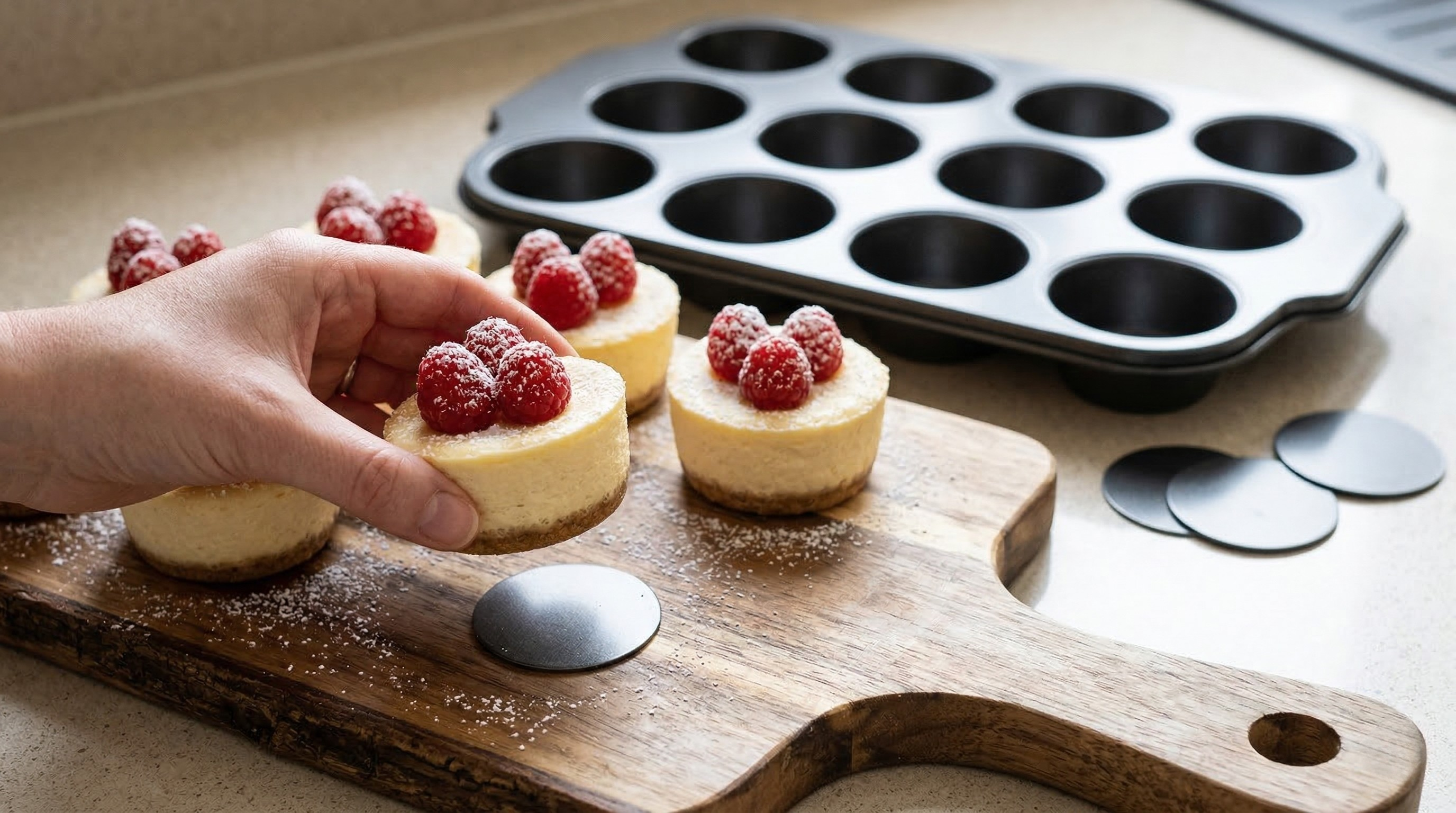
At a Glance
Oven: 155°C / 310°F (fan: 140°C)
Time: 28–32 minutes — start checking at 25
Done when: Edges set, centre jiggles like set jelly
Then: Oven off → door ajar 5 min → room temp → fridge 2 hrs
Get the Temperature Right (This Is the One That Matters)
If your mini cheesecakes crack, the oven is almost always the reason. Too hot, and the filling puffs up rapidly during baking, then contracts as it cools — pulling the surface apart.
Bake at 155°C (310°F) in a conventional oven. If you use a fan oven, reduce to around 140°C. This lower temperature lets the filling set gradually from the outside in, rather than ballooning and collapsing.
Every oven runs slightly differently. If you still see cracking at this temperature, try dropping another 5°C. A separate oven thermometer is worth it — built-in thermostats can be off by 10–15°C, especially in older ovens.
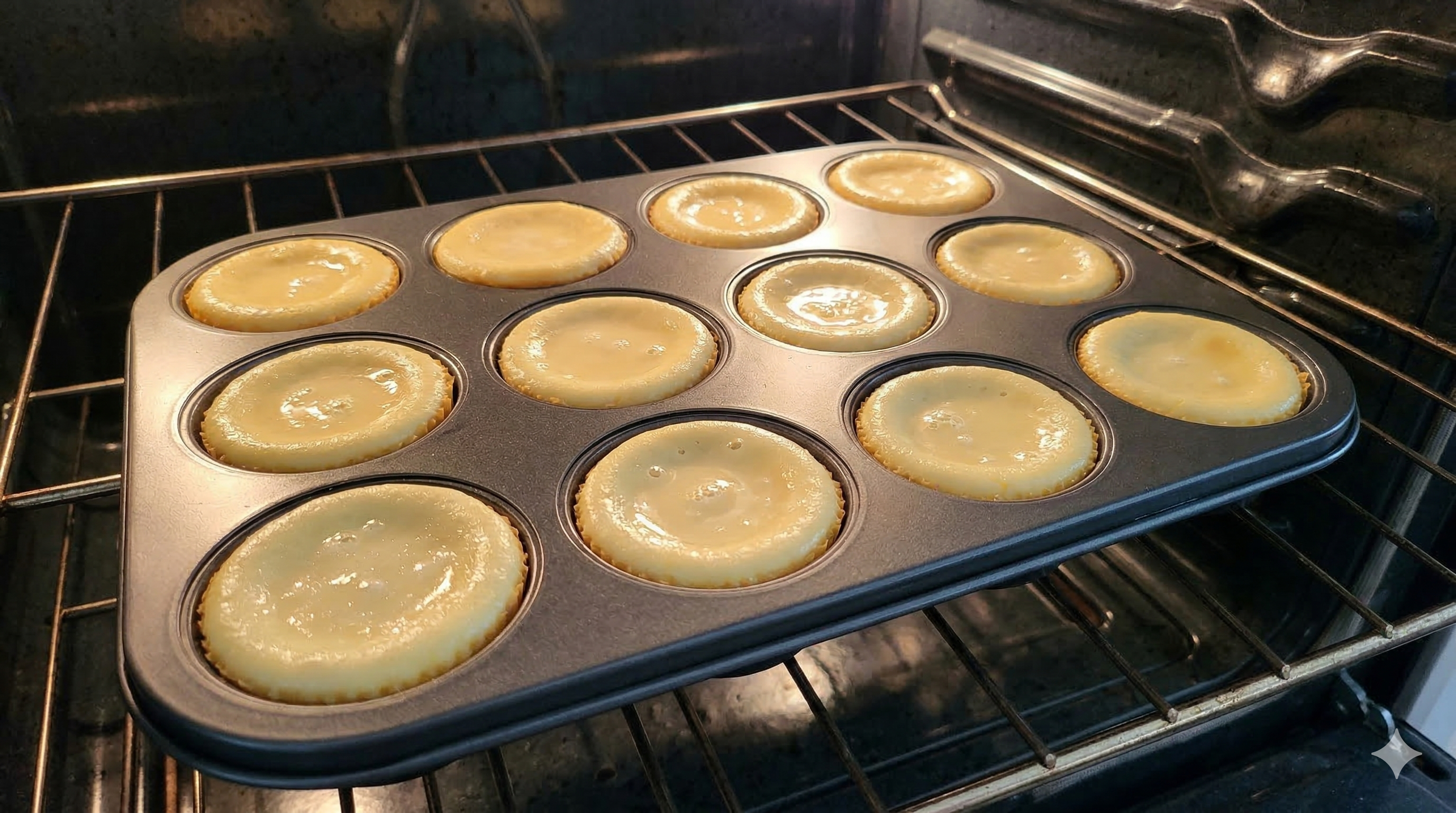
Timing for 3-Inch Pans
Mini cheesecakes bake much faster than full-size, and the margin for error is small. In your Wrenbury pan:
- Start checking at 25 minutes. Open the oven gently — don't slam the door.
- Typical finish is 28–32 minutes. Once you learn your oven's sweet spot, you'll hit it every time.
- Err on the side of under-baked. The filling continues to set as it cools. If the centre looks fully solid in the oven, you've already gone too far.
Why minis are different: A full-size cheesecake in a 9-inch tin might bake 55–70 minutes. The smaller volume of each 3-inch cup means heat reaches the centre much faster — that's why you can't just follow a standard cheesecake recipe's timing.
How to Tell When They're Done
You can't tell by colour — the top should still be pale, not golden. Use the jiggle test instead:
Give the pan a gentle tap on the oven rack. If the edges are set and lightly puffed, and the centre wobbles like set jelly — not liquid — they're done. The centre firms up completely during cooling.
If the centre doesn't move at all: overbaked. Still tasty, but denser than ideal. If the whole surface ripples like liquid: needs 3–4 more minutes.
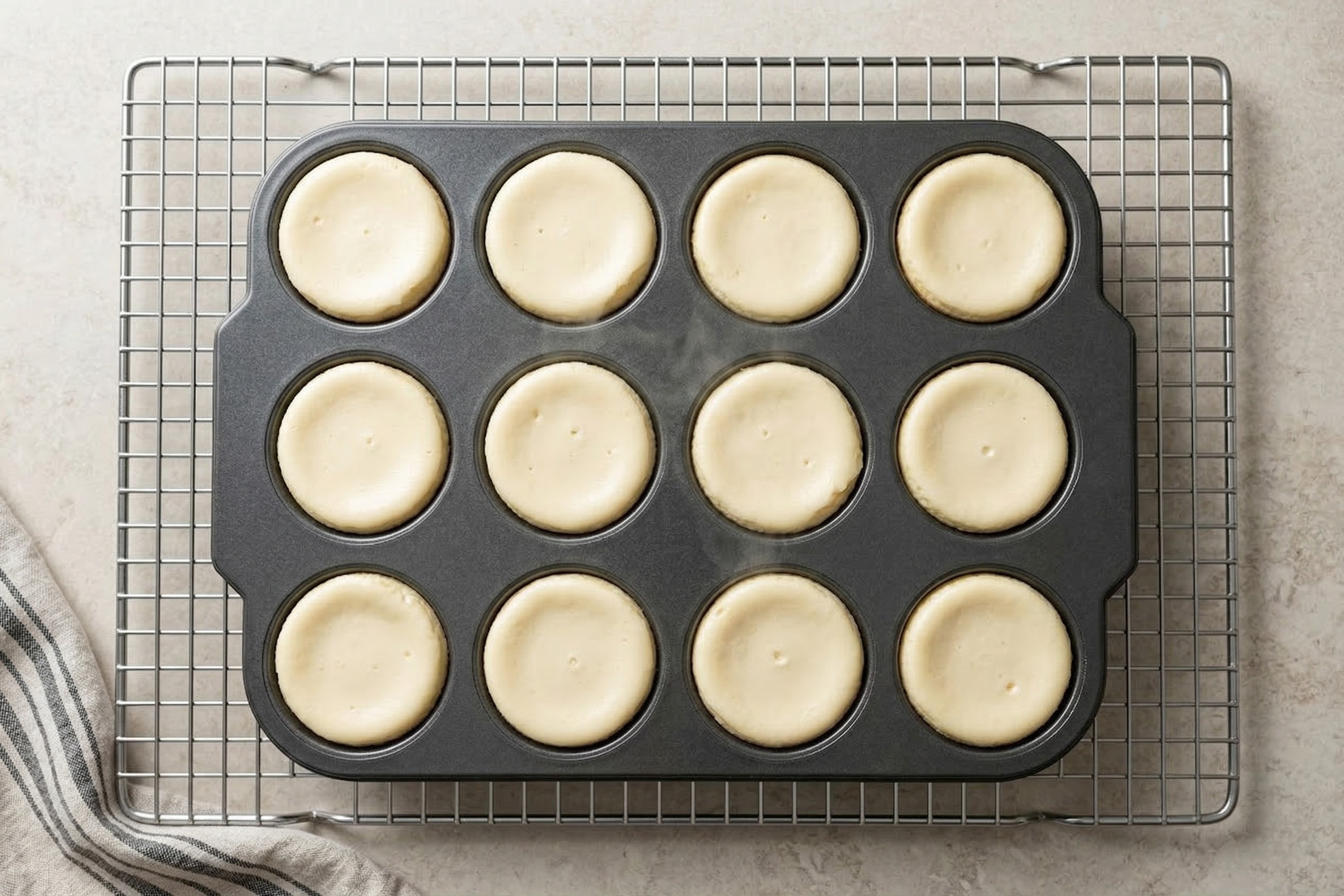
Cooling Without Cracks or Sinking
The second biggest cause of cracking: cooling too fast. When a hot cheesecake meets room-temperature air, the surface contracts faster than the inside — and it pulls apart.
- Turn the oven off when they're done.
- Crack the door open a few centimetres. Leave them inside 5 minutes.
- Move to the worktop and cool to room temperature (30–40 minutes).
- Refrigerate for at least 2 hours before removing from the pan. Overnight is even better.
Skipping step 2 is what causes most sinking. That gradual 5-minute cooldown in residual heat lets the filling settle without collapsing.
Getting Them Out of the Pan
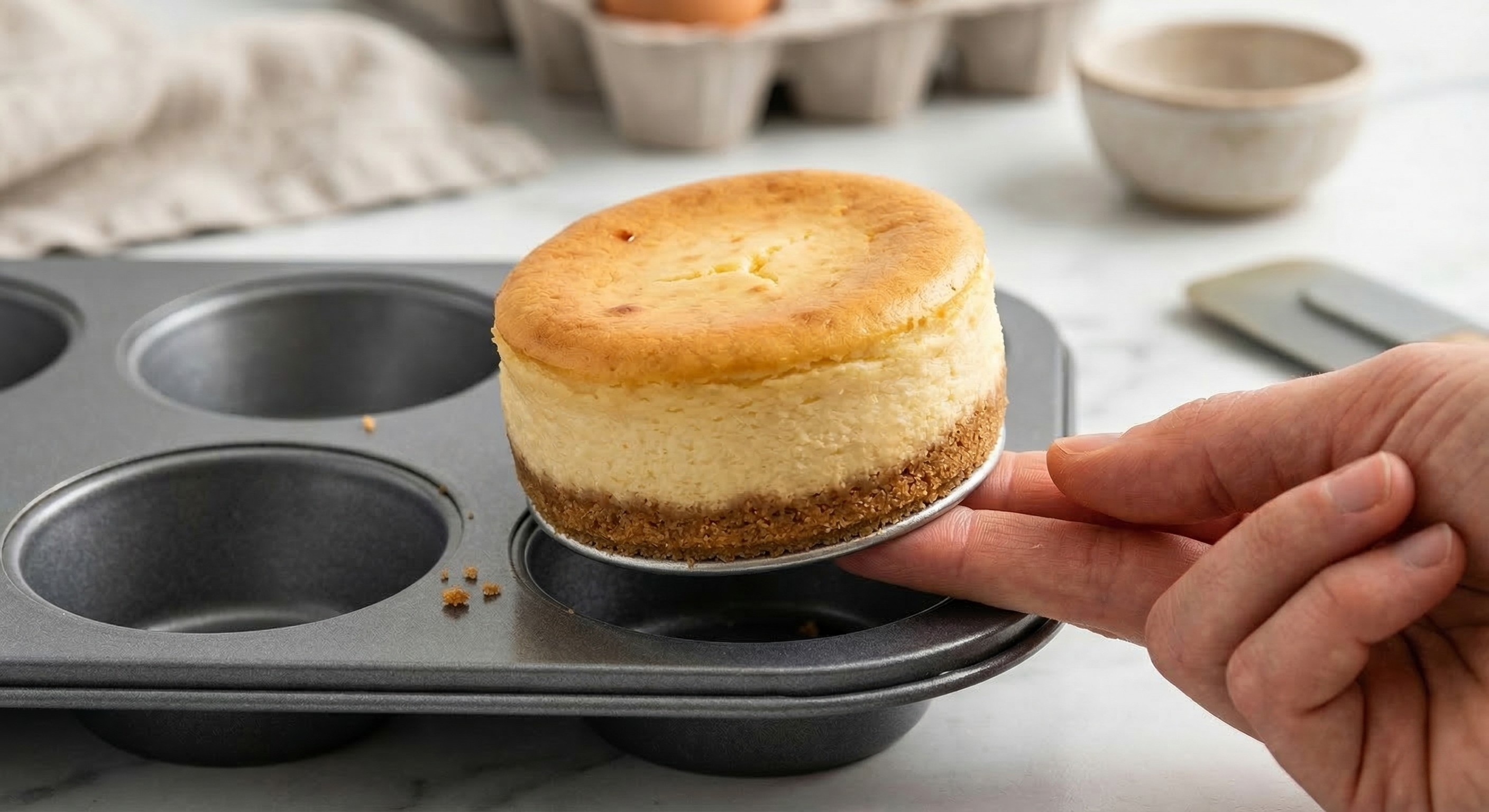
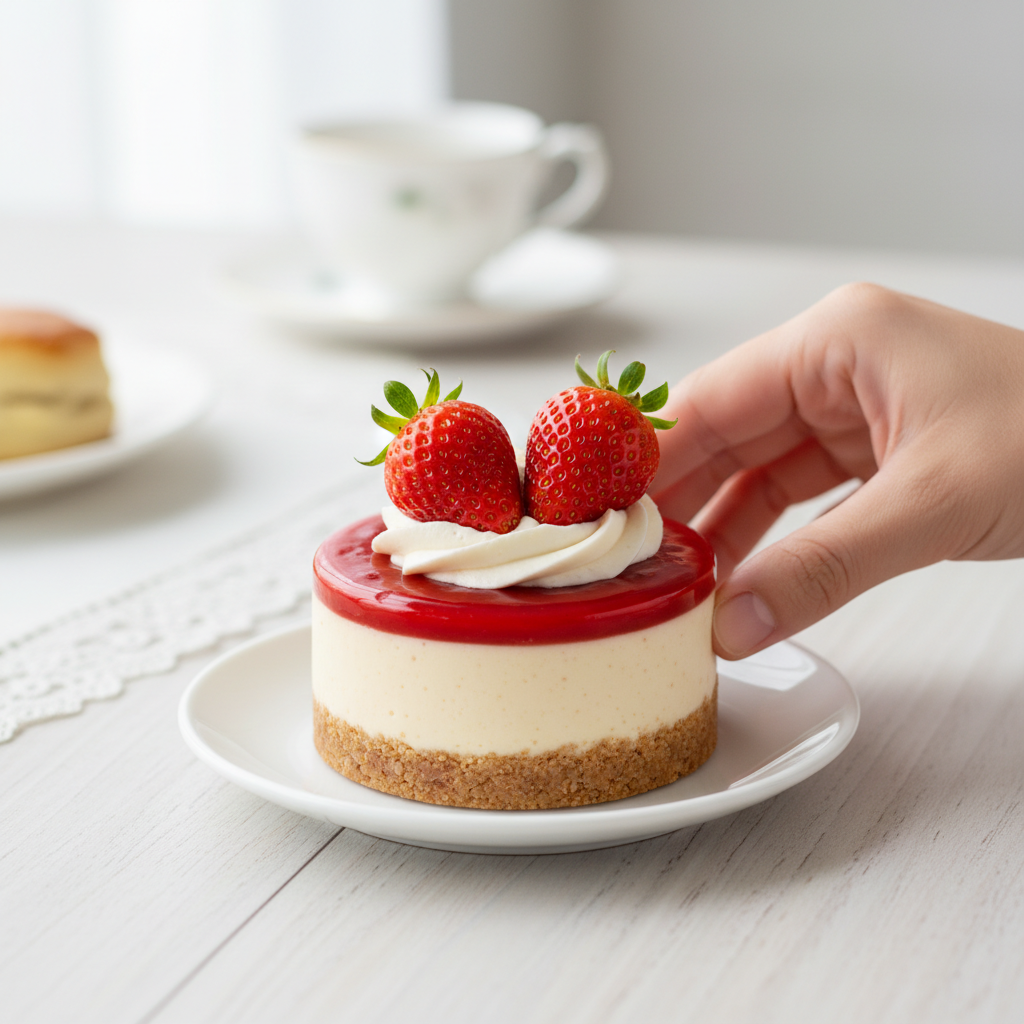
This is where the Wrenbury pan earns its keep. Each cup has its own removable push-up base — no muffin liners, no palette knives, no prying.
After chilling, push the base disc upward from underneath. The cheesecake slides out intact. A light brush of butter on the discs before filling makes release completely effortless.
If Something Goes Wrong
Cracked tops? Oven too hot, or baked too long. Drop your temperature by 5–10°C next time and use the oven-door cooling method. Also check you're not over-mixing — air bubbles expand during baking and crack the surface.
Sunken centres? Still slightly undercooked inside when you pulled them. Make sure the centre passes the jiggle test (set jelly, not liquid), and always do the 5-minute oven-door cooldown.
Dry or rubbery? Overbaked. Check earlier next time — they firm up a lot during the 2+ hours in the fridge.
Lumpy filling? Cream cheese was too cold. Leave it out for 30 minutes before mixing. Cold cream cheese doesn't blend smooth.
Sticking? A light brush of butter or tiny spray of oil on each base disc before filling. The non-stick does most of the work, but a bit of grease makes it perfect.
Your Exclusive Offer
As a thank-you for choosing Wrenbury, here's something for your next order — exclusively for customers who scanned the QR code in their pan.
10% Off Your Next Order
Valid on all bakeware and bundles at wrenbury.co.uk
Single use · No minimum · Expires 90 days from first scan
Recipe: Classic Vanilla Mini Cheesecakes
Now you know the technique — here's the recipe we include with every pan. No water bath, no fuss. About 45 minutes start to finish.

Classic Vanilla Mini Cheesecakes
For the Base
- 150g digestive biscuits, finely crushed
- 60g unsalted butter, melted
- 1 tbsp caster sugar
For the Filling
- 400g full-fat cream cheese (room temperature)
- 100g caster sugar
- 2 large eggs
- 1 tsp vanilla extract
- 150ml sour cream
- Zest of 1 lemon (optional)
Method
- Preheat your oven to 155°C (310°F).
- Make the bases. Mix crushed biscuits with melted butter and sugar. Press 1 tablespoon firmly into each cup — the loose bases make this easy, no liners needed.
- Beat the filling. Whisk cream cheese and sugar until smooth. Don't over-beat. Add eggs one at a time, then stir in vanilla, sour cream, and lemon zest.
- Fill each cup to about 3mm below the rim.
- Bake 28–32 minutes. Start checking at 25. Done when edges are set and centre jiggles gently.
- Oven off, door ajar, 5 minutes.
- Cool to room temperature, then fridge for at least 2 hours. Push each base upward to release.
Recipe: Nigella's London Cheesecake in Miniature
Nigella Lawson's London Cheesecake — from How to Be a Domestic Goddess — is one of Britain's most loved baked cheesecakes. The signature move is her grandmother's trick: adding a layer of sweetened sour cream and vanilla partway through baking. It creates a silky, almost mousse-like top.
The original needs a water bath and a springform tin. Your Wrenbury pan's individual cups eliminate the need for both. We've adapted it for 12 miniatures.

Mini London Cheesecakes
For the Base
- 150g digestive biscuits, finely crushed
- 60g unsalted butter, melted
For the Filling
- 500g full-fat cream cheese (room temperature)
- 120g caster sugar
- 3 egg yolks
- 1 tsp vanilla extract
- Zest of ½ lemon
For the Sour Cream Topping
- 150ml sour cream
- 1 tbsp caster sugar
- ½ tsp vanilla extract
Method
- Preheat to 155°C (310°F). Press biscuit bases firmly into each cup.
- Beat cream cheese and sugar until smooth. Add yolks one at a time, then vanilla and lemon zest.
- Fill cups to about two-thirds. Bake for 22 minutes — just set at the edges.
- While baking, mix the topping: stir sour cream, sugar, and vanilla together.
- At 22 minutes, spoon sour cream mixture over each cheesecake. Return to oven for 8 more minutes.
- Oven off, door ajar, 5 minutes. Cool completely, then fridge at least 2 hours before releasing.
What makes this special: The sour cream layer is Nigella's grandmother's trick — a silky top that contrasts with the dense filling beneath. The original needs a water bath in a springform tin. Your Wrenbury pan's individual cups do the job on their own.