
Posted by Mia Wren on 30th Oct 2026
Mini Christmas Cakes: Six Rich Fruit Cakes From One Fluted Tin
Header picture: illustration.
I want to give a few Christmas cakes away this year, and baking five full-size ones for five front doors is not happening. Nobody wants to be handed a foil-wrapped brick the weight of a paving slab anyway. They'd politely put it in a cupboard and find it again in February.
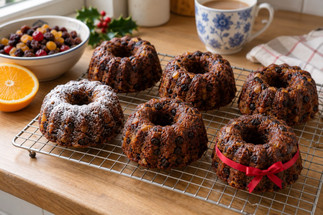
So I'm making them small. One batch fills a mini fluted cake tin, gives you six individual fruit cakes, and the whole lot is baked, fed and wrapped well before December.
Why small works better
A big fruit cake is a commitment. It takes three hours in the oven, a month of feeding, and a household that actually likes fruit cake, and I've got three kids and not one of them will go near it. A small one is a single slice and a cup of tea for whoever wants it, and the rest go to people who do. If you want the full-size version, our air fryer Christmas cake is a one-tin loaf, and the classic Christmas cake recipe is the deep round one.
The other thing in its favour is timing. Small cakes bake in under an hour and soak up brandy much faster than a big one, so you don't need to start in September. Bake them any time from now until the middle of November and they'll still get a few weeks of feeding.
The tin
The tin does most of the work here, because a fluted cup is the difference between a plain little cake and one that looks decorated before you've touched it. Each cup is 9.5cm across, which is a generous single portion, and the ridges mean you need hardly any icing.
Ours is 0.8mm carbon steel with a non-stick coating made without PTFE or PFOA. The thickness matters for fruit cake in particular, because it browns the sides ahead of the top, which is exactly what you want for a long, gentle bake, and it doesn't flex or warp at the low temperature. It also comes with our 10-year warranty. Hand wash it and dry it straight away, which is most of the care and use guide.

Mini Fluted 6 Cup Cake Tin
£17.99
Six 9.5cm fluted cups in 0.8mm carbon steel, non-stick made without PTFE or PFOA.
View product
Mini Swirl Fluted 6 Cup Cake Tin
£16.99
The same six 9.5cm cups with a swirled pattern instead of straight flutes.
View product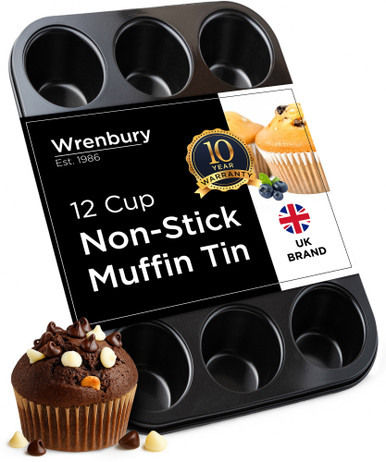
Non Stick 12 Cup Muffin Tray
£21.99
Twelve standard cups for smaller, plainer fruit cakes.
View productIf you'd rather have a dozen smaller ones, a 12 cup muffin tray works for the same mix. They bake much quicker, so start checking at twenty minutes. Our mini fluted tin buying guide and the mini ring cake guide cover choosing a tin and getting the cakes out whole, and the full range is on the mini cake tins page. Don't use silicone for these, as it blocks the heat and the cakes come out pale and gummy underneath.
The mix
This makes six cakes, one for each cup. The recipe is a scaled-down version of a standard rich fruit cake, and the weights are the point: fruit cake barely rises, so the amount you put in each cup is the amount you get out.
- 300g mixed dried fruit (raisins, sultanas, currants, with some chopped glacé cherries and peel if you like them)
- 4 tablespoons brandy, plus a little more for feeding (orange juice works if you'd rather not use alcohol)
- Zest of 1 orange
- 100g soft butter
- 100g dark muscovado sugar
- 2 large eggs
- 1 tablespoon black treacle
- 125g plain flour
- 40g ground almonds
- 1 teaspoon mixed spice and half a teaspoon of cinnamon
- A pinch of salt
How to make mini Christmas cakes in a fluted tin
- Soak the fruit. Stir the fruit, brandy and orange zest together in a bowl, cover it and leave it overnight. If you've forgotten, warm it in the microwave for a minute and leave it for an hour, but overnight is plumper.
- Heat the oven. Set it to 150°C (130°C fan) and put the tin on a baking tray, which makes it easier to lift in and out.
- Grease every flute. Brush melted shortening or oil into each ridge with a pastry brush, going right into the corners, then add a light dusting of flour. Oil gets into the grooves far better than butter does.
- Cream the butter and sugar. Beat them until pale, then beat in the eggs one at a time with the treacle. If it looks curdled, a spoonful of the flour will bring it back.
- Fold it together. Add the flour, ground almonds, spices and salt, then the soaked fruit and any liquid left in the bowl.
- Fill the cups. Weigh about 140g into each, level the tops and press a shallow dip into the middle with the back of a spoon, since fruit cake barely rises and the middle tends to peak. Any leftover mix can go in a ramekin.
- Bake for 45 to 55 minutes, checking from 40. A skewer in the middle should come out with a few moist crumbs, not wet batter. If the tops are darkening before then, lay a piece of foil over the tin.
- Rest, then turn out. Leave the cakes in the tin for ten minutes before turning them onto a rack, which is long enough for them to shrink slightly from the metal and short enough that they haven't set hard against it.
Feeding, wrapping and giving them away
While the cakes are still warm, prick the tops a few times with a skewer and spoon over a teaspoon of brandy each. After that, feed them once a week with another teaspoon until you wrap them for good. Small cakes soak quickly, so there's no need for the drip-by-drip routine you'd give a big one.
Once they're cool, wrap each one in baking paper, then in foil, and keep them in a tin in a cool, dark place. I'd treat about a month as comfortable at room temperature, and if you want them to last longer than that, wrap them tightly and freeze them.
To finish, brush the tops with warmed apricot jam, press on a disc of marzipan if you like it, and add a few glacé cherries. A cake that's already shaped like this doesn't need much else. If you're stuck for what else to give, our baking gifts guide has the tins, and the make-ahead mince pies are the other thing worth doing in October.
What goes wrong
Dry cakes are almost always overbaked. Small cakes go from done to dry in a few minutes, so check at 40 and trust the skewer, not the clock. Burnt edges are the other one, and a piece of foil over the tin fixes most of it. And if a cake sticks, it was under-greased: every flute needs a coat, including the bottoms of the ridges.
Common questions
Can I make mini Christmas cakes without alcohol?
Yes. Soak the fruit in orange juice instead of brandy and skip the feeding. They'll be a little less rich and won't keep as long, so make them closer to Christmas and eat them within a couple of weeks.
How far ahead can I make mini Christmas cakes?
Bake them any time up to the middle of November. Feed them weekly and wrap them in baking paper and foil, and they'll keep well for several weeks. If you want them to last longer, freeze them wrapped.
Why did my mini Christmas cakes stick in the tin?
Usually the flutes weren't greased well enough. Brush oil into every ridge with a pastry brush, flour the tin lightly the first few times, and leave the cakes to rest for ten minutes before turning them out.
How long do mini Christmas cakes take to bake?
About 45 to 55 minutes at 150°C (130°C fan) in a fluted tin with 9.5cm cups, though it depends on your oven, so check from 40 minutes. In a muffin tray they're done much sooner.
Can I use a muffin tin instead of a fluted tin?
You can, and you'll get twelve smaller cakes with the same mix. They bake faster, so start checking at twenty minutes, and the fluted ones will look more finished with less icing.
Do I need to line the tin?
Not if you grease it thoroughly. A non-stick fluted tin releases well when every ridge has a coat of oil, and lining is awkward in the grooves.
The short version is to soak the fruit, grease every flute, weigh about 140g into each cup and bake low and slowly, and you end up with six little cakes you can pop in the post.