
Posted by Mia Wren on 21st Sep 2026
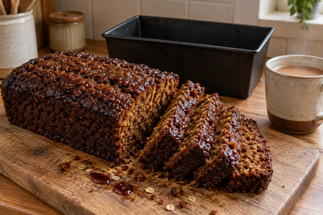
Bonfire Night Parkin in a 2lb Loaf Tin: Sticky, Dark and Ready a Week Early
Every parkin recipe I've ever looked at wants a 20cm square tin, and I haven't got one. What I've got is loaf tins, because I sell them. So last autumn I gave up hunting for the square tin and made it in the 2lb loaf tin instead, and it works. It actually works better for a family, because a loaf cuts into thick fingers you can hand out at the door on Bonfire Night, and a square tin's worth is more than three kids and two adults get through before it goes hard.
If you've never had parkin, it's a Yorkshire gingerbread made with oats and black treacle. It comes out of the oven dry and a bit boring, then you wrap it up, ignore it for a week, and it turns sticky and dark and completely different. Nobody believes me until they've done it.
Why a loaf tin, and what changes
Every parkin recipe you'll find is written for a square tin about 5cm deep. A loaf tin is 8cm deep and much narrower, so the same batter sits in a taller block and the middle takes longer to cook through. So you bake it lower and longer, and you don't try to squeeze a full square-tin batch into one loaf tin, because it'll come up over the rim and you'll be scraping treacle off the oven floor. This recipe is a smaller mix, made for one 2lb tin, and it gives you ten to twelve fingers.
The other thing a loaf tin does is give you a proper end crust at both ends, and in a treacle cake the ends are the bit everyone fights over. (In our house that's me, because the kids only want the middle.)
The tin situation
I use a standard 25 x 13 x 8cm 2lb loaf tin, and two things about it matter for parkin. It's a fixed base, and parkin batter is thin, more like pouring custard than cake mix, so it'll find its way out of a loose-bottomed tin and onto the oven floor. And it's heavy carbon steel, which holds heat in the metal itself, so the outside of the loaf cooks at a steady pace instead of the corners racing ahead and burning while the middle is still raw. Thin tins are the reason so many people end up with parkin that's black at the edges and crumbly in the centre.
Line it. The coating means you don't normally have to, and for bread I don't bother, but parkin is a sugar-and-treacle cake and I'd rather lift it out by the paper than run a knife round a sticky loaf. How to line a loaf tin shows the fold. Use baking parchment, not greaseproof, because greaseproof has no silicone on it and it'll weld itself to the treacle.
Ours are non-stick made without PTFE or PFOA, with a 10-year guarantee, and they wash up with warm water and a sponge. Dry it straight away and it'll do parkin every November for a decade, which is basically the whole care guide.
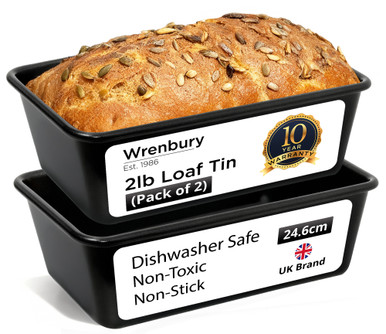
Non Stick 2lb Loaf Tin Pan Set of 2
£26.99 £31.99
Two 25 x 13 x 8cm tins, heavy carbon steel, non-stick made without PTFE or PFOA. One for the parkin, one for the bread, both in the oven at once.
View product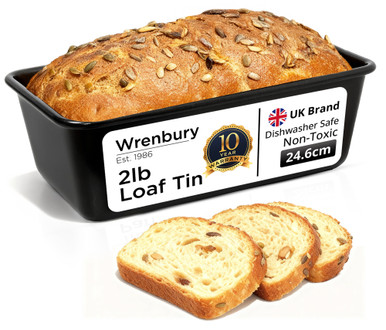
Non Stick 2lb Loaf Tin Pan
£15.99
The single 2lb tin, same steel and the same coating. Ten to twelve fingers of parkin from one bake.
View product
Non Stick 1lb and 2lb Loaf Tin Pan Set of 2
£24.99
The 2lb for the oven and the 1lb that fits an air fryer, so you're covered for the full loaf or the small air fryer version further down.
View productThe oats question
The oats catch people out, because proper parkin uses medium oatmeal, which is oats ground down to a coarse sand, and most supermarkets don't stock it. Porridge oats are fine as long as you blitz them in a food processor for ten seconds so they're a rough crumb. Don't use them whole, and don't use jumbo oats, because whole oats don't soften enough and you end up with something closer to a flapjack than a cake. (I did this the first time. The kids called it "the crunchy one" and it was not a compliment.)
The mix (makes one 2lb loaf)
- 125g self-raising flour and 125g medium oatmeal, or porridge oats blitzed fine
- 2 tsp ground ginger, 1 tsp mixed spice and a pinch of salt
- ½ tsp bicarbonate of soda
- 110g butter
- 100g black treacle and 100g golden syrup
- 75g dark brown soft sugar
- 1 large egg
- 100ml milk
Two teaspoons of ginger sounds like a lot, and it isn't, because parkin is meant to taste of ginger and a week of maturing softens it anyway. If you like it fiery, make it three.
The treacle and syrup are half and half here, which is the Yorkshire way of doing it. All treacle and it goes bitter, almost liquorice, which some people love and my lot won't touch. All golden syrup and it's a nice ginger cake but it isn't parkin. (Lancashire will tell you otherwise. Lancashire can make its own.)
Weighing treacle is horrible, so put the saucepan on the scales and weigh it straight in. Or stand the tin in a bowl of hot water for five minutes first and it'll pour like syrup instead of coming out in one sulking lump.
How to bake it
How to bake parkin in a 2lb loaf tin
- Heat and line: Heat the oven to 150°C, or 130°C fan. Line the 2lb loaf tin with baking parchment, with the paper coming up above the rim at the long sides so you can lift the loaf out later.
- Melt: Put the butter, treacle, golden syrup and sugar in a pan and melt them together over a low heat. Stir until the sugar has gone, then take it off and let it cool for five minutes. If you add the egg to it hot you'll get sweet scrambled egg, and I've done it.
- Dry ingredients: Mix the flour, oatmeal, ginger, mixed spice and salt in a big bowl.
- Bicarb: Warm the milk a little and stir the bicarb into it until it's dissolved. Do this just before you use it, not ten minutes earlier.
- Combine: Pour the melted butter mix into the dry ingredients, add the egg, then the milk, and stir until it's just combined. It'll look far too runny, and that's right. Don't beat it, because the more air you whip in, the more it sinks later.
- Into the tin: Pour it into the tin. It should come about halfway up. Put it in the oven on the middle shelf.
- Foil at 45 minutes: Leave it alone for 45 minutes, then have a look. The top will be dark by now, because that's what treacle does, so lay a bit of foil loosely over the tin if it's colouring further, and give it another 15 minutes.
- Test from an hour: A skewer in the middle should come out with a few sticky crumbs on it, not wet batter. Mine takes 65 to 70 minutes. The middle will feel firm and spring back a little when you press it, and if you've got a probe, 95°C in the centre is done. Don't cook it until the skewer is bone dry, because that's a dry parkin and no amount of waiting fixes it.
- Cool, wrap, wait: Leave it in the tin until it's completely cold. It's brittle while it's warm and it'll crack if you lift it out early. Then lift it out by the paper, wrap it in fresh baking parchment, then foil, and put it in a tin. Now go away for a week.
Dry, sunk or burnt: the usual parkin problems
Almost every sad parkin story I've heard comes down to one of three things.
It's dry and crumbly. Nine times out of ten it was overbaked, because a treacle cake looks done long before it is and people leave it in to be safe. Pull it while the skewer still has sticky crumbs on it. The other cause is that you cut it on day one, and fresh parkin is always dry, so wrap it and wait.
It sank in the middle. Too much raising agent, or the batter was beaten instead of stirred, or it came out underdone and collapsed as it cooled. A slight dip is fine and traditional, but a crater means one of those three, so keep the bicarb to half a teaspoon, stir gently, and give it the full hour.
It looks burnt. It probably isn't, because treacle bakes very dark, and the edges of a loaf go darker than a square tin because there's more crust in proportion to the middle. If the top is catching before the middle's done, that's the foil at 45 minutes. If it's the sides, your oven's running hot, and next time give it 20 minutes longer at 140°C rather than reaching for a thinner tin.
And if it tastes bitter, that's the treacle, so go 75g treacle and 125g golden syrup next time and it'll still be parkin.
Waiting for it (the bit that matters)
Parkin is baked hard and then softens in the tin, because treacle and syrup pull moisture towards themselves over the days that follow. On day one it's a dry ginger cake, by day three it's getting there, by day five it's sticky, and a week in it's the thing people remember from their gran's house.
So work backwards from the 5th. Bake it the last weekend of October, wrap it while it's cold, and don't cut it until Bonfire Night. If you want to bake earlier than that, it keeps for a fortnight in the tin and goes on getting stickier, so mid-October is fine too. Just don't cut a corner off "to check", because it dries from the cut edge. If you can't help yourself, bake two, eat one warm with custard and put the other one away. That's what the second tin in the set is for.
Freeze it after it's matured rather than before. Wrap it well and it'll keep for three months, which means you can bake it in October and pull it out for a wet weekend in January.
(This is the same idea as the air fryer Christmas cake, which I bake the first weekend of October and feed until December. October is when I do all the waiting cakes. November is for eating them.)
If you want to use the air fryer
A 2lb tin won't fit most baskets, but a 1lb loaf tin will, and half the mix above fills one nicely. I've only done this a couple of times, so treat these timings as a starting point and trust the skewer. Preheat to 150°C, foil over the tin from 20 minutes because the fan browns the top fast, and test from 35 minutes. It's usually done at 40 to 45. Leave it in the tin to cool, wrap it, and give it the same week. What can you bake in an air fryer has the basket measurements if you're not sure what fits.
Common questions
Can you bake parkin in a loaf tin instead of a square tin?
Yes. Use a smaller batch, about 250g of flour and oatmeal combined for a 2lb loaf tin, and bake it lower and longer than a square-tin recipe says: 150°C, or 130°C fan, for 60 to 70 minutes, with foil over the top from 45 minutes. A full square-tin recipe is too much batter for one loaf tin and will rise over the rim.
Why is my parkin dry instead of sticky?
Either it was overbaked, or it hasn't matured yet. Take it out while a skewer still has sticky crumbs on it, then wrap it in parchment and foil and leave it in a tin for at least five days. Fresh parkin is always dry. If it's still dry after a week, use a little more treacle and syrup and a little less oatmeal next time.
Can I use porridge oats instead of oatmeal?
Yes, but blitz them to a coarse crumb in a food processor first. Whole porridge oats don't soften enough and the parkin comes out like a flapjack. Don't use jumbo oats at all. Medium oatmeal is the traditional choice if you can find it.
How long do you leave parkin before eating it?
A week is the classic answer and it's a good one. Three days is the minimum for it to start going sticky, and it goes on improving for a fortnight if it's wrapped and kept in a tin. Bake it the last weekend of October for Bonfire Night.
Why has my parkin sunk in the middle?
A small dip is normal. A deep one means too much raising agent, a batter that was beaten rather than stirred, or a loaf that came out underdone and collapsed as it cooled. Use half a teaspoon of bicarb with self-raising flour, stir gently, and give it the full hour before you test it.
Can I freeze parkin?
Yes, for up to three months. Let it mature first, then wrap it in parchment and foil and freeze it whole or in fingers. Defrost it wrapped, at room temperature, and it'll be as sticky as the day it went in.
The short version
One 2lb loaf tin, a small mix, 150°C for just over an hour, and then the hardest part, which is leaving it alone for a week. Bake it the last weekend of October and it'll be ready when the sparklers come out. And if you're on the fence about which tin, our loaf tin buying guide goes through the whole range.